
Online reviews influence decisions about restaurants, contractors, products, professional services, travel, and many other purchases. Consumers often expect ratings and testimonials to reflect genuine customer experiences. However, some businesses, marketers, and other parties may create, purchase, manipulate, or suppress reviews in ways that give shoppers a misleading impression. Fake online reviews may raise concerns under federal and state consumer protection laws, depending on the conduct involved.
Understanding how review manipulation works may help consumers evaluate online information more carefully. It may also help someone recognize when misleading ratings played a role in a financial decision. Federal agencies such as the Federal Trade Commission address certain deceptive and unfair marketplace practices, including practices involving consumer reviews and testimonials.
Why Online Reviews Matter to Consumers
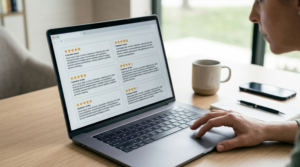 Online reviews have become an important part of the modern purchasing process. Before spending money, consumers may compare star ratings, testimonials, written comments, photographs, and other feedback from previous customers. A large number of positive reviews may create confidence in a company, while poor ratings may lead shoppers to choose another option.
This influence makes the accuracy of reviews significant. A consumer may choose a product because hundreds of people appear to praise it. Someone searching for a contractor may select a company after seeing several five-star testimonials. Another person may purchase an expensive service after reading what appears to be independent customer feedback.
Problems may arise when those reviews do not reflect genuine consumer experiences. The FTC provides guidance on evaluating online reviews and warns consumers that some ratings or testimonials may not accurately reflect independent customer experiences.
How Fake Online Reviews Can Mislead Consumers
A fake review may do more than add another comment to a website. Large numbers of manufactured positive ratings may raise an overall score and influence how consumers perceive a business. Fake negative reviews may also harm competing companies. Undisclosed paid endorsements may appear to represent independent opinions even when the reviewer has a financial relationship with the seller.
Review manipulation may be difficult to identify because suspicious reviews do not always look exaggerated. Some may contain detailed descriptions, moderate ratings, photographs, or realistic complaints designed to make the reviewer appear genuine.
Consumers may benefit from comparing several sources rather than relying entirely on one website. Reviewing account histories, publication dates, repeated phrases, and patterns among ratings may also provide useful context.
AI May Make Fake Reviews More Convincing
Artificial intelligence has added another dimension to online review manipulation. Generative AI tools may produce natural-sounding text that resembles genuine customer feedback. These tools can create numerous variations of promotional or negative reviews without repeating identical wording.
The legal concern generally does not depend only on whether artificial intelligence helped produce the text. A central question may be whether the review truthfully represents the experience and opinion it claims to describe.
For example, an AI-assisted review based on a real customer’s actual experience may present different issues from a fabricated testimonial attributed to someone who never purchased the product.
What Types of Review Practices May Be Deceptive?
The FTC has established rules addressing certain practices involving consumer reviews and testimonials. More information is available through the agency’s Consumer Reviews and Testimonials Rule.
Consumers do not need to understand every regulation before purchasing something online. However, knowing the types of conduct that may raise concerns can make suspicious review activity easier to recognize.
Reviews From People Who Did Not Have the Claimed Experience
A review may be misleading when it is presented as the opinion of a genuine customer even though the person does not exist or did not actually use the product or service being described.
Businesses may also face legal concerns when they knowingly purchase, distribute, or promote reviews that falsely represent real consumer experiences.
Buying Positive or Negative Reviews
A business may ask customers to leave honest feedback. Problems may arise when incentives depend on the customer providing a particular positive or negative opinion.
For example, offering a benefit only if a customer leaves a five-star review may affect the reliability of the resulting rating. Other consumers could believe the review represents an independent opinion when it was influenced by the promised benefit.
Undisclosed Insider Reviews
Consumers may give more weight to reviews they believe come from independent customers. Reviews written by company employees, managers, agents, relatives, or other connected individuals may therefore become misleading when relevant relationships are hidden.
Disclosure provides consumers with additional context. Someone reading a testimonial may evaluate it differently after learning that the reviewer works for the company selling the product.
Suppressing Negative Reviews
Review manipulation is not limited to creating positive ratings. Certain efforts to suppress genuine negative reviews may also create a misleading impression.
Businesses may respond to complaints, investigate suspicious reviews, or moderate content under legitimate policies. However, practices designed to improperly prevent consumers from sharing genuine negative experiences may raise consumer protection concerns.
Company-Controlled Review Websites
Another issue may arise when a business controls a website that appears to offer independent reviews or recommendations. Consumers may believe they are reading neutral comparisons when the company operating the site has a financial interest in the products being promoted.
Transparency matters because consumers may make different purchasing decisions when they understand who created the content and whether the reviewer has a relationship with the seller.
Does Every Suspicious Review Violate the Law?
No. A strange, inaccurate, unfair, or extremely enthusiastic review does not automatically establish a legal violation. Consumers have different opinions, and businesses generally cannot control every statement posted by customers.
A disappointed buyer may leave a very negative review. Another customer may genuinely post several paragraphs praising a business. Those circumstances alone do not necessarily indicate manipulation.
Legal concerns may become more significant when evidence indicates that reviews were fabricated, purchased, deceptively incentivized, falsely attributed, manipulated, or suppressed through prohibited conduct.
Federal law is also only part of the legal picture. Individual states may have consumer protection laws, advertising rules, contract laws, fraud statutes, and deceptive trade practice laws that apply to particular transactions.
What If You Bought Something Because of Fake Reviews?
Seeing misleading reviews does not automatically mean that a consumer has a lawsuit or a specific legal remedy. The available options depend on what happened, what representations were made, how much money was involved, and which laws apply.
For example, someone who purchased an inexpensive household product may face a different situation from a consumer who entered into a costly service agreement after relying heavily on fabricated testimonials.
Save Evidence Before It Disappears
Online information can change quickly. Reviews may be edited or removed, business pages may disappear, and ratings may change. Consumers who believe misleading reviews affected a transaction may want to preserve relevant information.
Useful records may include screenshots, advertisements, product listings, receipts, invoices, emails, text messages, contracts, refund requests, payment records, and photographs.
Our guide on what documents to prepare before talking to a lawyer explains additional types of records that may help when discussing a legal matter.
Create a Timeline of What Happened
A simple timeline may also help organize the facts. Consumers may record when they viewed the reviews, when they made the purchase, what problems developed, when they contacted the business, and what response they received.
This information may provide useful context if the consumer later files a complaint, disputes a payment, or speaks with a legal professional.
What Can Consumers Do After Being Misled?
The appropriate response depends on the transaction and the problem involved. A consumer may begin by contacting the business and explaining the issue. Depending on company policies and applicable law, a refund, replacement, cancellation, or other resolution may be available.
Consumers may also report suspected deceptive conduct through ReportFraud.ftc.gov. The platform allows consumers to report fraud, scams, and other potentially deceptive business practices to the FTC.
State attorneys general may also operate consumer complaint programs. Procedures and available options vary by state, so consumers may need to review the rules where they live or where the transaction occurred.
Consider Payment Dispute Options
 Depending on the payment method and circumstances, consumers may have dispute procedures available through a credit card company, bank, payment platform, or online marketplace.
These processes may have deadlines and documentation requirements. A payment dispute is also separate from determining whether a business violated consumer protection laws.
Consumers should provide accurate information and preserve records supporting the dispute.
Report Suspicious Reviews to the Platform
Many online marketplaces and review platforms maintain policies against fabricated reviews, conflicts of interest, undisclosed incentives, and review manipulation.
Consumers who notice suspicious content may report it directly to the website or platform where the review appears.
The FTC’s online review guidance also encourages consumers to consider information from more than one source before making a purchasing decision.
When Might Legal Guidance Be Helpful?
Speaking with a legal professional may be useful when a transaction involves substantial financial losses, repeated deceptive conduct, a complicated contract, identity theft, business fraud, or disagreements about available remedies.
A lawyer may review the facts and explain which laws could apply. Depending on the circumstances, the analysis may involve federal consumer protection rules, state deceptive trade practice laws, advertising requirements, fraud laws, or contract principles.
Consumers who prefer to begin remotely can review our guide explaining how online legal consultations work and when you may need a lawyer.
How to Evaluate Reviews Before Spending Money
No method can identify every fake or manipulated review. However, consumers may reduce their reliance on potentially misleading information by checking several sources instead of depending entirely on one website.
Review dates, account histories, repeated wording, unusual rating changes, and disclosures about incentives may provide useful clues.
The FTC also provides online shopping guidance that consumers may review before purchasing products or services online.
Look Beyond the Overall Star Rating
A high star rating may look convincing, but the number itself provides only part of the story. Reading individual reviews may reveal patterns that are not visible in the overall score.
Consumers may compare recent reviews with older feedback and examine whether reviewer accounts have posted meaningful comments about other products or businesses.
Independent information may also provide additional context. Government agencies, professional licensing boards, consumer agencies, product safety databases, and established publications may offer information that is not available on a seller’s own website.
Be Careful With Reviews Used in Advertising
Testimonials displayed inside advertisements deserve similar scrutiny. Influencer endorsements, customer stories, video testimonials, and promotional reviews may function as advertising even when they resemble ordinary consumer content.
Consumers may consider who created the content, whether financial relationships are disclosed, and whether important claims can be confirmed through other reliable sources.
The Bottom Line on Fake Online Reviews
Fake online reviews may influence what consumers buy, which businesses they hire, and where they spend their money. Certain practices involving fabricated reviews, deceptive incentives, undisclosed relationships, misleading review websites, and review suppression may raise consumer protection concerns.
At the same time, not every inaccurate or suspicious review creates a legal claim. The facts, evidence, transaction, applicable laws, and resulting financial losses all matter.
Consumers who believe misleading reviews affected a costly decision may benefit from preserving screenshots, receipts, advertisements, communications, and payment records. These materials may provide useful context when contacting the business, filing a complaint, disputing a transaction, or discussing the situation with a legal professional.