
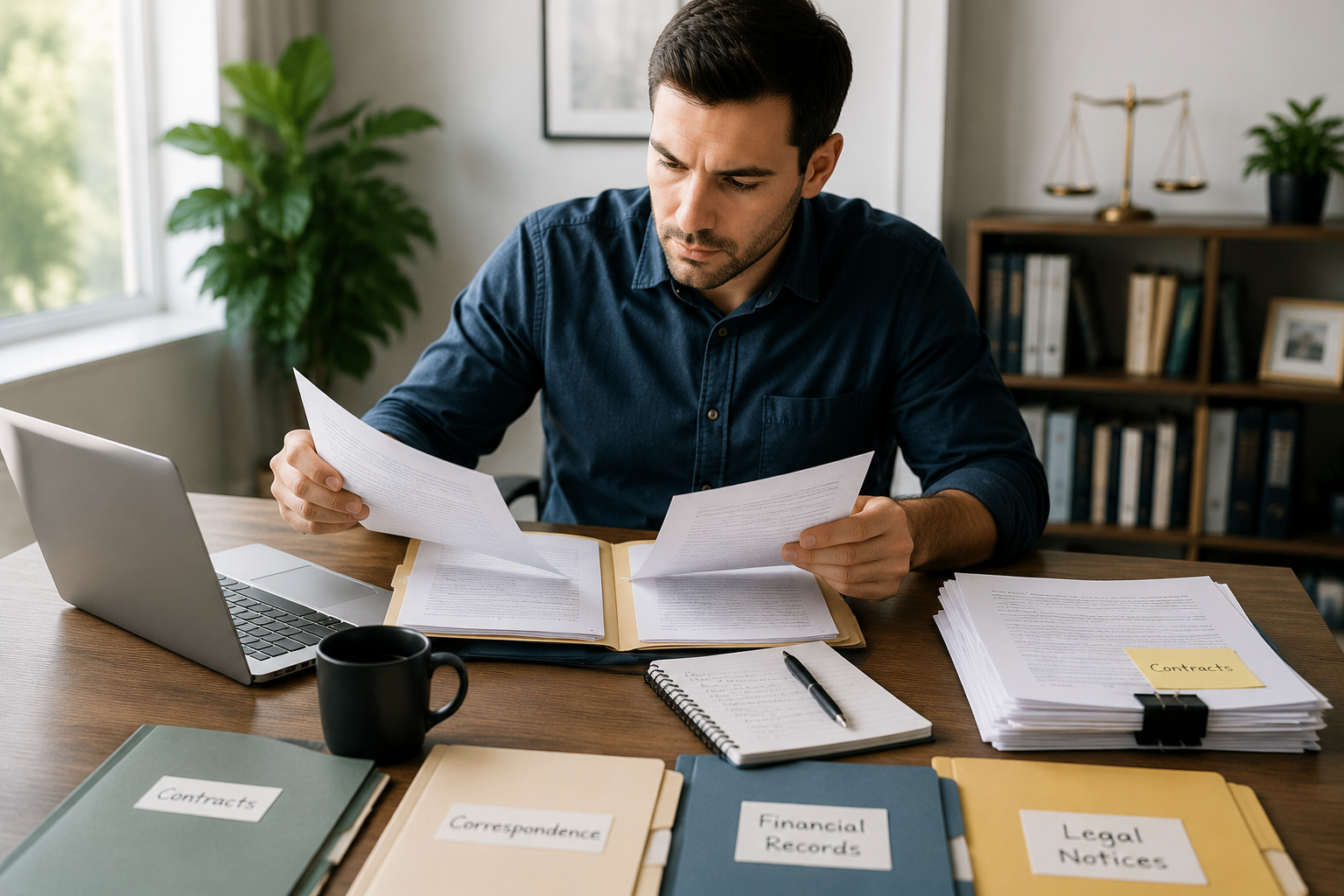
Speaking with a lawyer for the first time can feel overwhelming, especially when you are dealing with an unfamiliar legal issue. Whether you are facing a dispute, reviewing a contract, dealing with a family matter, starting a business, or trying to understand your legal rights, preparation can make your consultation much more effective.
One of the most important steps before meeting with a lawyer is gathering the right documents and information. Legal professionals use these materials to understand your situation, evaluate possible options, identify important facts, and determine what steps may be appropriate.
Knowing what documents to prepare before talking to a lawyer can save time and help you get more value from your consultation. Organized records allow your lawyer to focus on your legal concerns instead of spending valuable time searching for basic details.
If you are also learning about the different ways people access legal assistance, you may want to read our guide on how online legal consultations work to understand what to expect before speaking with a legal professional.
Why Documents Are Important During a Legal Consultation
 Lawyers rely on facts, evidence, and documentation when reviewing a legal matter. While explaining your situation verbally is important, written records often provide details that may be difficult to remember during a conversation.
Documents can help establish timelines, confirm agreements, show communication between parties, and provide evidence supporting your position. In many situations, the quality and organization of your records can affect how efficiently a lawyer can evaluate your options.
For example, if you have a disagreement involving a contract, your lawyer may need to review the original agreement, amendments, payment records, emails, and other related communications. If you are dealing with an employment concern, workplace policies, employment agreements, pay records, and messages from your employer may provide important context.
The American Bar Association explains that preparation and communication are important parts of an effective attorney-client relationship. Providing organized information helps your lawyer better understand your goals and concerns.
Common Documents to Prepare Before Meeting With a Lawyer
Contracts and Agreements
Contracts are some of the most commonly reviewed documents in legal consultations. These documents explain the responsibilities, rights, and obligations of everyone involved in an agreement.
You should bring copies of any contracts connected to your legal issue, including:
- Employment agreements
- Business partnership agreements
- Lease agreements
- Purchase agreements
- Service contracts
- Loan agreements
- Settlement agreements
Make sure to include the complete version of the agreement along with any attachments, updates, or amendments. A missing page or incomplete document could leave out important information that affects your situation.
If your concern involves reviewing legal documents before signing, our upcoming guide about things to check before signing a contract can help you understand common issues to look for.
Legal Notices and Official Letters
 Any official communication related to your legal issue should be saved and brought to your consultation.
This may include:
- Court documents
- Demand letters
- Government notices
- Collection letters
- Attorney correspondence
- Written warnings
These documents may contain important deadlines or requirements. Ignoring an official notice can sometimes limit your available options or create additional legal problems.
If you receive a legal notice, avoid immediately responding without understanding the situation. Consider reviewing the document carefully and seeking appropriate legal guidance.
Communication Records
Emails, text messages, letters, and other written conversations can provide valuable information during a legal consultation.
Communication records may help show:
- Promises or agreements made by another party
- Attempts to resolve a dispute
- Important conversations about your legal issue
- Changes to previous agreements
Instead of bringing every message you have exchanged, organize communications that are directly connected to your legal concern. Highlight important conversations and note the dates when possible.
Personal Information Your Lawyer May Need
In addition to legal documents, your lawyer may need basic personal information to understand your situation and determine the best approach.
Depending on your legal matter, this may include:
- Your full name and contact information
- Names of other people or organizations involved
- Important dates and locations
- Previous legal agreements
- Financial information related to the issue
- Records of previous legal communication
Providing accurate information helps prevent misunderstandings and allows your lawyer to evaluate your situation more efficiently.